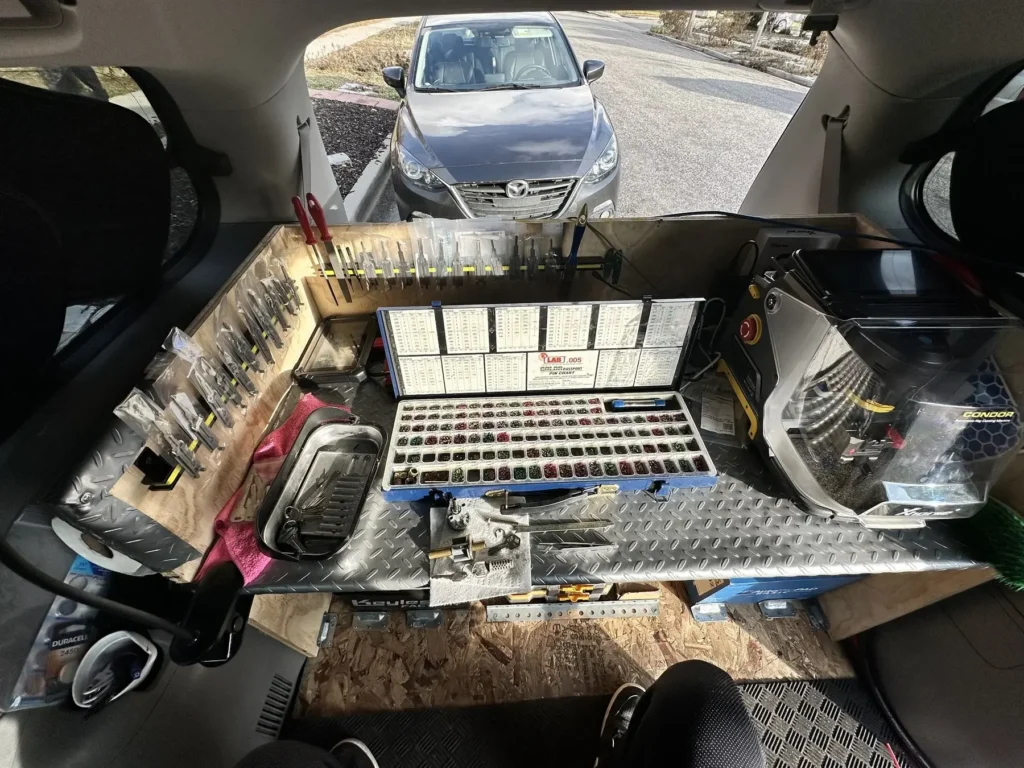
If you’re wondering how to spot a locksmith scam, start by slowing down long enough to verify who you called and what the job will cost. Watch for a missing business name, a price that changes after arrival, or pressure to drill before anyone explains why. Ask for a clear quote and identification before work begins.
When you’re locked out, speed matters—but so does knowing who is coming to your door or vehicle. These checks can help you choose a locksmith with confidence in Utah and avoid surprise charges.
How to spot a locksmith scam: warning signs to check
One warning sign on its own may not prove anything. Look at the whole interaction: how the company answers, what it tells you about price, and whether the technician explains the work before starting.
- No clear business name. If the person answering won’t give you the company’s name, or the name changes during the call, ask for clarification before booking.
- Vague phone answers. Be cautious if you can’t get a direct answer about the service call, the likely method, or what could change the price. A responsible provider should be willing to explain what they know and what they need to inspect.
- A bait price that balloons. A very low advertised price—such as $15—may not reflect the actual cost of getting a technician to you and completing the job. Ask what the quoted amount includes and what circumstances could add charges.
- Pressure to drill immediately. Drilling can be necessary in some situations, but it can damage a lock and may mean replacement is needed. Ask the technician to explain why non-destructive options won’t work before approving drilling.
- No ID or ownership check. A locksmith should take reasonable steps to confirm you’re authorized to access the home, business, or vehicle. Be wary if someone is willing to open a lock without checking.
- An unmarked vehicle with no explanation. Ask who is arriving and how you can identify the technician. If the vehicle or technician doesn’t match what you were told, call the business before letting them begin.
- Cash only, with no clear receipt. A refusal to discuss other payment methods or provide a written record can make it harder to resolve a disagreement. Confirm payment options and ask for an itemized receipt.
What to ask before a locksmith arrives
You don’t need to know how to pick a lock or repair an ignition. A few practical questions can help you understand the plan and decide whether you’re comfortable moving forward. If the answers stay vague or you feel rushed, pause and call another provider.
- What is the business name? Ask for the name and the technician’s name. Confirm how the technician will identify themselves when they arrive.
- What is the estimate for my specific situation? Describe whether it’s a house, car, or business lockout and share any relevant details, such as the type of lock or vehicle. Ask what the estimate includes and what could change it.
- Will you confirm the price before starting? Ask the technician to inspect the situation, explain the recommended work, and give you the final quote before you authorize service.
- Will you try an appropriate non-destructive option first? The right approach depends on the lock and circumstances. Ask for the reason if drilling or replacing hardware is recommended.
- What payment methods do you accept, and is there a warranty? Get the answers before work begins, and ask for the terms in writing or on the receipt.
For a more detailed checklist, see what to ask before a locksmith quote in Salt Lake City. The goal is not to challenge every technician; it’s to make sure you understand the work and agree to the cost.
Why locksmith quotes can vary
Two calls that sound similar can require different work. A simple lockout may be different from a damaged lock, a high-security cylinder, or a car key that needs programming. The time of service, location, hardware, and the condition of the lock or key can also affect the recommended work and total price.
That’s why a realistic estimate may depend on details or an in-person assessment. The important distinction is whether a provider explains the limits of an estimate and gets your approval for the actual price before proceeding. Don’t agree to work based only on a headline price if the provider won’t say what it covers.
For The Utah Locksmith, home, car, and business lockouts start from $59. The technician should provide a clear quote before work begins. You can review locksmith pricing and ask how the estimate applies to your particular job.
What a trustworthy locksmith visit should look like
A professional visit should feel clear, not pressured. The technician should identify themselves, confirm that you’re authorized to access the property or vehicle, assess the situation, explain the options, and tell you the price before starting. You should have the chance to approve the work—or decline—before tools come out.
After the job, ask what was done and whether any parts were replaced. Keep the receipt, especially if the work includes a warranty. For The Utah Locksmith, completed work includes a 6-month warranty, and customers have flexible payment options. You can also read customer reviews to learn about other people’s experiences.
If you’re comparing providers, look for specific answers rather than big promises. A useful call should leave you knowing who is coming, what the next step is, and how pricing will be confirmed. The Utah Locksmith serves Salt Lake City and communities across northern Utah, with emergency service for home, vehicle, and business lockouts.
What to do if something feels wrong
You can stop before work begins if you’re uncomfortable with the quote or the proposed method. Ask the technician to pause, repeat the price, and explain the work. If you still don’t feel confident, decline service and contact another provider. If work has already started, ask for an explanation of any new charge before authorizing additional work.
Keep messages, estimates, receipts, and payment records. If you believe you’ve been misled, document what happened and consider contacting your payment provider or the appropriate consumer protection agency for guidance. Avoid making a decision under pressure, especially if the price changes significantly or the technician won’t explain why.
Get back inside with a clear plan
A locksmith should make a stressful lockout easier, not leave you guessing about the bill. The Utah Locksmith aims to arrive in about 15–30 minutes when possible, gives a clear quote before work, checks ID and authorization, and backs completed work with a 6-month warranty. Call (385) 354-5566 for service in Salt Lake City, or contact The Utah Locksmith to request help.
Frequently asked questions
What is the biggest warning sign of a locksmith scam?
A very low quote that changes sharply after the technician arrives is a major warning sign. Ask what the estimate includes and require approval of the actual price before work begins.
Should a locksmith check my ID?
Yes. A locksmith should take reasonable steps to confirm you’re authorized to access the home, business, or vehicle. Be cautious if a provider is willing to open a lock without checking.
Is drilling a lock always a scam?
No. Drilling may be necessary in some cases, but it can damage the lock and lead to replacement costs. Ask why it is needed and what alternatives were considered before approving it.
How can I avoid surprise locksmith charges?
Describe the job clearly when you call, ask what the estimate includes, and confirm the final quote before work starts. Pause if the price changes and request an explanation before authorizing additional work.
What should I do if a locksmith pressures me?
Ask the technician to stop and explain the price and recommended work. If you’re not comfortable, decline service before work begins and contact another provider.
Need help with your locks or keys?
Tell us what happened and where you need service. We can discuss the work and confirm availability.